Key Takeaways
- AI in HR now extends well beyond HR technology into jobs, workflows, decisions and organisational design.
- The strongest use cases usually begin with a specific work problem rather than the purchase of an AI tool.
- Human oversight needs to mean genuine decision-making authority, particularly where outcomes affect people.
- Job redesign matters because automating tasks can change the quality, pace and cognitive demands of the work that remains.
- HR has a growing role in AI governance, skills, workforce planning and deciding how human and machine capabilities should work together.
Last updated: November 2026
AI in HR: the short answer
AI in HR is the use of artificial intelligence to support, automate or improve people-related work. It can be used in recruitment, learning, workforce planning, employee services, people analytics and HR administration, as well as within the work employees and managers do across the organisation.
Generative AI has widened that definition. HR is no longer only deciding which HR processes should use AI. It is increasingly responsible for questions about jobs, skills, management, employee trust and how people work alongside intelligent systems.
The central question for HR is therefore becoming: which tasks should AI perform, which should it support and where must people retain responsibility and judgement?
What is AI in HR?
AI in HR covers a broad range of technologies that can analyse data, recognise patterns, generate content, make recommendations or automate parts of a process.
Some applications have been used for years: matching candidates to vacancies, predicting workforce trends, recommending learning or answering routine employee questions. Generative AI added the ability to create and synthesise text, images and other content in response to natural-language prompts. More recently agentic AI has started to move from generating an answer towards completing a sequence of tasks or acting within a workflow.
This progression is important because the organisational implications change as AI takes on more of the work.
An employee asking an AI assistant to summarise a document raises different questions from a recruitment system ranking candidates or an AI agent completing an HR process. The more consequential the action the more important issues of data, accountability, explainability and human oversight become.
This is why treating AI in HR simply as another HR technology category is increasingly inadequate. It is becoming part of the infrastructure through which work gets done.
How is AI changing HR?
AI is changing HR by shifting it from managing individual tools and processes towards redesigning work, decisions, skills and workflows.
The first wave of workplace generative AI was largely individual. Employees used tools to draft, summarise, analyse and research faster.
The next phase is more structural. Organisations are beginning to embed AI into workflows and redesign how tasks move between people and systems. This brings HR into questions that sit well beyond technology implementation.
Who remains accountable when an AI system recommends an action? What happens to a job when its routine tasks disappear? How do employees develop expertise if AI performs some of the work through which expertise was previously acquired? How should managers assess performance when AI is contributing to the output?
The evidence remains more nuanced than some of the predictions. A 2026 International Labour Organization review found that generative AI productivity gains are real but uneven. Worker-reported time savings of a few per cent of working hours have not automatically translated into higher measured output, earnings or employment. The ILO also points to changing work organisation, autonomy and job quality as important areas to watch.
Its earlier global analysis found that one in four workers is in an occupation with some exposure to generative AI, while concluding that transformation of jobs remains more likely than wholesale replacement because human input continues to be required.
For HR, job exposure is therefore only the beginning of the discussion. Current evidence suggests job redesign is becoming a more useful lens than simply asking whether AI will take jobs.
What are the best uses of AI in HR?
The best uses of AI in HR tend to be tasks that are repetitive, information-heavy and relatively easy for a person to check.
There is no universal list of 'best' applications because the value depends on the problem, the quality of the data and the consequences of getting the answer wrong.
Some of the most useful starting points are tasks that are repetitive, information-heavy and relatively easy to check. These can include drafting and summarising, searching internal knowledge, answering common employee questions, preparing initial analysis, producing learning materials and supporting routine administration.
AI can also help HR professionals explore scenarios, interrogate data and challenge their own thinking. Used this way, it acts as a support for human expertise rather than an automatic decision-maker.
Greater caution is warranted where decisions materially affect an individual: who gets hired, promoted, disciplined, redeployed or made redundant, for example. Speed and scale can make weak assumptions harder to notice as easily as they can make good processes more efficient.
A useful starting test is not simply 'can AI do this?' but 'what happens if it gets this wrong, and who is able to recognise that?'
How should HR use AI responsibly?
HR should use AI responsibly by understanding what data goes into a system, what decisions it influences and where meaningful human oversight is required.
Responsible AI starts with understanding the use case. HR should know what information is going into a system, what it is being used to produce, who can see the output and what decisions may follow from it. Employees also need enough transparency to understand when AI materially affects their work or employment.
Data protection is one part of this. Bias, accuracy, security and accountability also need attention. So does the question of whether employees still have a meaningful route to challenge an outcome.
The temptation is to treat responsible AI as a policy exercise. Policies matter but responsibility ultimately sits in the design of the work. A rule requiring 'human oversight' achieves little if the human reviewer is expected to approve hundreds of AI recommendations under time pressure.
Real oversight requires time, information, authority and the ability to disagree with the system.
How should HR govern AI?
HR should govern AI through clear ownership, risk assessment, approved-use rules, vendor scrutiny, human decision rights and ongoing monitoring.
AI governance does not require HR to become the organisation’s technical regulator. It does require clarity about who is responsible for what.
Organisations need visibility of where AI is being used, a way to distinguish lower-risk experimentation from consequential applications and clear ownership of decisions. They also need rules around approved tools and data, vendor due diligence, human decision rights, monitoring and what happens when something goes wrong.
HR should have a strong voice wherever AI affects recruitment, performance, skills, job design, workforce decisions or employee data.
The legal environment reinforces this. In the UK the Information Commissioner’s Office has made automated recruitment a regulatory focus. Its 2026 work with employers highlighted the need for transparency, appropriate safeguards, meaningful human involvement and monitoring for bias.
For employers operating in the EU the AI Act classifies a number of employment applications as high risk, including systems used to analyse and filter job applications, evaluate candidates and make certain decisions affecting workers. Under the current implementation timetable, rules governing these Annex III high-risk systems are due to apply from 2 December 2027.
Governance therefore needs to be built into AI adoption rather than added after a system has become embedded.
How is AI changing job design?
AI is changing job design by altering the mix of tasks people perform, removing some routine work while increasing the importance of judgement, exception handling and coordination.
This may be one of the most important AI questions for HR. Jobs are bundles of tasks. AI rarely affects every task in a job equally, which means the impact of automation depends on what is removed, what remains and what new work is created.
Automating routine work can create capacity for more valuable activity. It can also leave employees with a greater concentration of difficult exceptions, checking, coordination and judgement. This changes the nature of the job.
There is also a development issue. Junior employees often gain expertise by performing tasks that may appear routine to someone more experienced. If AI removes those tasks, organisations need another way for people to develop the knowledge and pattern recognition required for more senior work.
This is why job redesign deserves more attention than simple predictions about job losses. HR needs to understand tasks, capabilities and workflows, then decide deliberately how human and machine contributions should fit together.
Removing routine work does not automatically make a job better. As we have explored elsewhere, AI can leave people doing more checking, more exception handling and more intensive judgement even while individual tasks become faster.
The People Space has described this emerging environment as the human–machine workplace: work increasingly performed through collaboration between people and intelligent systems, with responsibilities distributed between both. The consequence is a need to rethink job design, accountability and trust.
How should HR balance AI and human judgement?
HR should use AI to support judgement where it improves speed or insight, while keeping people accountable for decisions that require context, interpretation or carry significant consequences.
Human judgement is often mentioned as the safeguard against AI error. That makes sense, but organisations need to be much more precise about what judgement means.
It involves understanding context, recognising when information is incomplete, weighing competing considerations and taking responsibility for a decision. These are particularly important where there is no single objectively correct answer.
As AI makes information easier to access and produces increasingly convincing recommendations, the ability to assess whether an answer actually fits the situation may become more valuable.
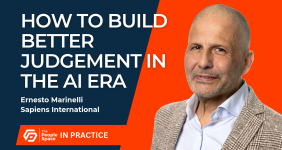
This is already influencing talent practice. At Sapiens International, chief people officer Ernesto Marinelli is exploring what he calls “judgement velocity” – the ability to understand a situation, assess what AI produces and decide whether it makes sense in context. The company has begun experimenting with case-based approaches to recruitment and development as it considers how judgement itself can be strengthened.
The wider skills picture points in a similar direction. The World Economic Forum’s Future of Jobs research identifies AI and big data among the fastest-growing skills, alongside continued demand for analytical thinking, resilience, leadership, creative thinking and other human capabilities.
AI fluency and human capability increasingly need to develop together.
What are the risks of AI in recruitment?
The main risks of AI in recruitment are biased outcomes, opaque decision-making, misuse of personal data and over-reliance on automated scores or recommendations.
Recruitment demonstrates both the attraction and the danger of AI particularly clearly. AI can help process large numbers of applications, improve administration and assist recruiters in finding relevant information. It can also rank, score or filter candidates at a scale that makes flawed criteria highly consequential.
Potential risks include biased outcomes, opaque decisions, inappropriate use of personal data and excessive reliance on a score or recommendation that recruiters do not properly understand.
The ICO reported in March 2026 that almost three quarters of employers in an Institute of Student Employers survey expected to increase their use of AI and automation in recruitment over the following five years. Its work with employers found that automated decision-making was often being applied in the early stages of hiring and called for stronger transparency and safeguards.
Human review should therefore be designed into consequential recruitment decisions. Recruiters need to know what the system is evaluating, where its limitations lie and when an outcome should be challenged.
Efficiency is useful. Decision quality remains the test.
What does AI mean for the future of HR?
AI is likely to automate some HR work while increasing the value of HR capability in work design, workforce planning, governance, skills and organisational change.
Some administrative and analytical work can increasingly be supported or automated. At the same time organisations need expertise in workforce planning, organisational design, skills, change, governance and the human consequences of technology.
That creates an opportunity for HR to move further into the design of work.
The profession will need enough AI literacy to understand what systems can and cannot do. It will need stronger capability in data and experimentation. It will also need the confidence to question technology decisions when the effect on people, work or organisational capability has not been thought through.
The skills employees need will change too. Employers surveyed for the World Economic Forum’s Future of Jobs Report identified AI and big data as the fastest-growing skills area, while analytical thinking remained the most widely valued core skill.
The implication is broader than teaching people to prompt an AI tool. Organisations need to decide what knowledge remains important, how employees build expertise and which human capabilities become more valuable as machines take on more cognitive work.
How can HR redesign work around AI?
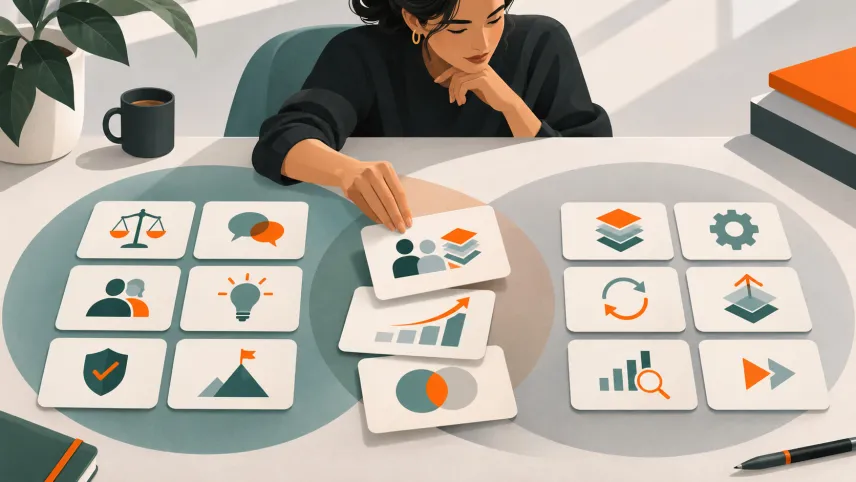
The starting point should be the work rather than the technology. Take a role or workflow and break it down into the tasks being performed. Identify where AI can automate an activity reliably, where it can help a person perform the task better and where context, relationships, accountability or judgement make human ownership important.
Then look at what that allocation does to the job as a whole. Has the role become richer or simply more intense? Has AI created capacity or increased expectations? Are employees still developing the experience they will need later? Is responsibility clear when a person and an AI system both contribute to an outcome?
Those questions should be tested in practice. Productivity, quality, employee experience, error rates and decision outcomes can all tell a different story from time saved alone.
This is why HR belongs at the centre of AI-enabled work redesign. Technology can change the tasks people perform. Leadership choices determine whether the result is better work. This is the difference between simply automating tasks and designing AI for better jobs.
Where should HR start with AI?
HR leaders do not need a finished vision of the AI-enabled organisation before they begin. Start by making current use visible. Understand where employees and managers are already using AI, including unofficial experimentation. Identify the work problems worth solving and separate low-consequence uses from decisions that affect people materially.
Then look at the work itself. Map the tasks. Decide where automation, augmentation and human judgement each belong. Test the new workflow with employees who understand the job. Measure the result and be prepared to change it.
AI in HR will continue to evolve quickly. The more durable capability for HR is not knowing every new tool. It is knowing how to make good choices about people and work as the tools change.
Related AI in HR: AI and Automation in HR hub
About the author