The forgotten layer in the age of AI
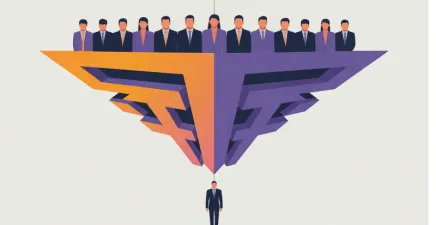
For years middle managers have been cast as organisational dead weight – the layer that slows change and clings to hierarchy. As automation, agile models and flatter structures spread, the assumption was simple: technology can replace the middle.
But it hasn’t. In fact, the more AI accelerates decision-making and digital workflows the clearer it becomes that humans are still needed to interpret, connect and create meaning. The Future Work Forum believes that’s where middle managers come in, as sense-makers and culture shapers in the human–machine workplace.
“If I listen to those who talk about restructuring and lean management, making companies faster, more efficient, then they always talk about middle managers as the lazy ‘brake pedal pushers’, naysayers, blockers, those who we don't need. And the question is, how can we get rid of them as fast as possible?” says leadership and change management consultant Matthias Mölleney. He calls for a reappraisal of their value.
“Middle managers matter more than ever. They are anchors of stability and influencers in shaping culture narratives. We need them as supporters – enabling teams, removing barriers and changing the perception of them from paralysing layer to change agents.”
The bridge between strategy and people
In an era of hybrid work distributed teams and fast-moving change middle managers are the connective tissue that holds organisations together. They sit at the intersection of strategy and lived experience, translating ambition into reality and feeding insight back up the chain.
Ben Emmens, director of The Conscious Project, describes them as brokers and connectors: “They make things happen through negotiation, influence and facilitation.” Yet investment in this group has been minimal. Leadership programmes still focus on senior executives at the top or emerging talent at the bottom. The people who turn ideas into progress are often left to cope alone.
This disconnect equals a productivity and trust gap. Without empowered managers who can bridge competing pressures, transformation efforts collapse under their own complexity.
Sense-making in uncertain times
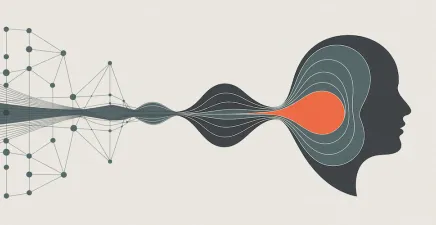
AI can automate processes and even generate insight but it cannot yet create sense, that human synthesis of information, context and emotion that makes change feel purposeful.
Beyonder and chief architect Patrick Cowden argues that this is the new frontier of leadership: “Purpose sits too high. People think the ‘why’ is important but it's the meaningfulness – the meaning of things – that is extremely valuable for a human being to engage. And deeper than meaning is sense. Middle managers, close enough to see both the top and bottom of the system, are uniquely positioned to be these sense facilitators.”
As AI handles more analytical work middle managers become the interpreters: guiding teams through ambiguity, helping them see how digital tools fit into the organisation’s values and ensuring that technology augments rather than alienates.
Michael Jenkins, CEO of Expert Humans, notes that the critical period of learning used to be early in a career. But as AI takes over many thinking tasks “that critical period of knowledge acquisition may actually cease to exist. So how will we preserve skills acquisition?” He suggests that this will be a critical role of middle managers – the human coaching, storytelling and connection that will define success.
The emotional cost of being in the middle
The problem, as executive coach Samreen McGregor points out, is that appreciation rarely follows responsibility. Many middle managers feel both empowered and abandoned, squeezed between expectations from above and demands from below.
Real appreciation is about creating systems that recognise the emotional weight of this role: peer mentoring, coaching circles and leadership pathways that value empathy as much as efficiency.
If empowerment continues without connection, she warns, we risk replacing burnout at the top with burnout in the middle, right where the organisation needs stability most.
Redefining leadership for the human + AI era
To unlock this potential organisations must redesign what leadership looks like. Promotions can no longer reward only technical mastery but must recognise relational and narrative skill – the ability to guide others through change and give technology a human context.
As Future Work Forum patner Richard Savage notes, if we don’t define what middle managers are really there for their success will be defined in the narrowest possible way. In an AI-augmented workplace the best leaders will be those who can connect systems, strategy and people.
Rebranding the role
Even the term middle manager feels out of step with modern work. Peter Thomson, chairman of the Future Work Forum, argues for a new vocabulary that reflects influence rather than hierarchy. “As we move to more networked organisations, to self-managed teams, areas where management becomes more distributed, then middle management is almost a contradiction,” he says. Bridge managers, sense-makers, culture carriers – these titles describe contribution, not position.
Ultimately, the goal is pride. Too often middle managers are viewed as “a gang of losers“ says Mölleney. “Would you like to be one of those losers?” he asks. We need to make the role something people aspire to again. Middle managers aren’t the problem; they’re part of the solution to navigating uncertainty.
From invisible to invaluable
The Future Work Forum believes that the next phase of transformation won’t be led from the top down but from the middle out. Middle managers are the ones who connect AI systems with human values, strategy with culture, and productivity with purpose.
Ignore them and transformation fails. Support them and work becomes truly human-centred again.
3 ways HR can reinvent middle management
- Redefine promotion criteria to include empathy, influence and narrative intelligence.
- Build peer networks for coaching and psychological support.
- Shift the narrative: from controllers to connectors, from hierarchy to humanity.
About the author