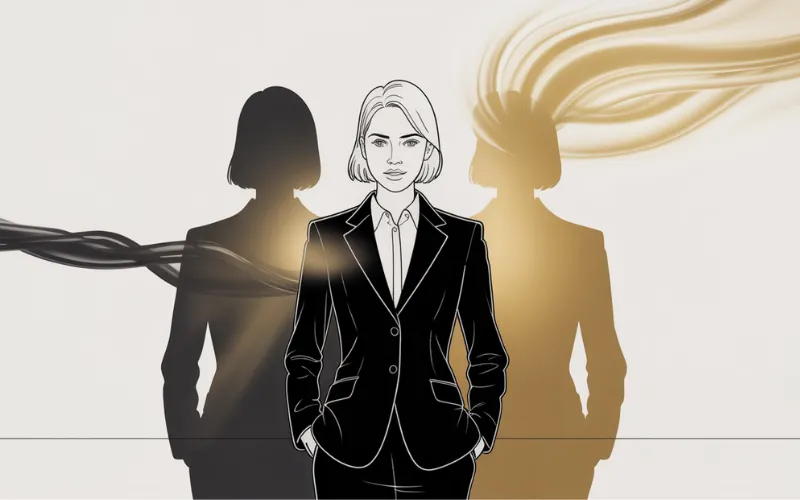
Key insights from Steven D’Souza’s Shadows at Work
- Shadows are the suppressed parts of ourselves that unconsciously shape behaviour
- Golden Shadows represent untapped strengths we’ve disowned
- Shadow collisions between colleagues escalate conflict and erode culture
- Leaders’ Shadows often drive corporate scandals when blind spots go unchecked
- Organisational Shadows explain the gap between stated values and lived culture
- By integrating shadows, leaders can unlock empathy, adaptability and trust
Elena prided herself on being a collaborative leader. She championed open communication, encouraged diverse perspectives and regularly spoke about the importance of psychological safety. Yet her team meetings had become tense affairs where colleagues exchanged nervous glances and carefully modulated their contributions. What Elena couldn’t see was how her own defensiveness was undermining the open dialogue she wanted to foster.
When team members offered alternative viewpoints, Elena’s body language shifted almost imperceptibly. Her jaw tightened, her posture straightened, and her responses became clipped and formal. While she genuinely believed she welcomed challenge, her shadows were telling a different story. The part of herself that feared criticism, that needed to be seen as competent and in control, was unconsciously shutting down the very dialogue she claimed to value.
Elena’s experience illustrates a fundamental truth about workplace interactions. Our shadows – those aspects of ourselves we’ve pushed aside, denied or simply never acknowledged – show up at work whether we recognise them or not. They influence how we lead, how we collaborate and how we contribute to the cultures we inhabit.
What are shadows in the workplace?
Psychologist Carl Jung described shadows as containing everything we’ve learned not to be. They include the qualities we’ve suppressed because they seem unprofessional, the emotions we’ve hidden because they feel too vulnerable and the aspects of ourselves that don’t match our carefully constructed professional personas.
In our achievement-oriented work environments we indulge in elaborate performances of competence, confidence and control. We learn to hide uncertainty, mask frustration and suppress the parts of ourselves that might be perceived as weak or inappropriate. Yet these rejected aspects don’t disappear. They retreat into the unconscious, continuing to shape our behaviour in ways we rarely recognise.
The irony is that our shadows often contain not just our perceived flaws but our greatest potential strengths. The leader who has suppressed their intuition in favour of analytical skills might be missing crucial insights. The manager who has buried their creativity beneath layers of process and procedure could be stifling innovation. What Jung called the ‘Golden Shadow’ represents these untapped capabilities that we’ve somehow learned to disown.
How do shadows create workplace conflict?
What happens when two colleagues’ shadows unconsciously interact? Consider the example of David, a senior consultant who prides himself on being thorough and detail-oriented, and Maya, a project manager known for her efficiency and results focus. On the surface, they seem like ideal collaborators. In practice, their working relationship has become increasingly strained.
David’s shadows contain his disowned impatience and desire for recognition. Having grown up as the youngest in a family of high achievers, he learned early to gain attention through perfectionism and exhaustive preparation. When Maya pushes for quicker decisions or streamlined processes, she inadvertently triggers his fear of being seen as careless or unprepared.
Maya’s shadows hold her suppressed vulnerability and need for control. Having experienced early career setbacks due to missed deadlines, she’s developed an almost obsessive focus on delivery. When David insists on additional analysis or raises potential complications, she unconsciously experiences this as criticism of her competence and leadership.
Neither recognises how their projections fuel their conflict. David attributes Maya’s focus on efficiency to superficiality and lack of rigour. These are qualities he’s worked hard to disown in himself. Maya sees David’s thoroughness as resistance and perfectionism. These are traits she’s suppressed in her drive to be seen as decisive and action oriented.
Their shadow dance creates ripple effects throughout their organisation. Team members begin taking sides, meetings become battlegrounds for competing approaches and the collaborative culture the company aspires to slowly erodes. All because two talented professionals cannot see how their unexamined fears are undermining their shared goals.
Why leaders must recognise their shadows
For those in leadership positions shadow awareness is critical. Leaders’ hidden biases, blind spots and defensive reactions affect both their own performance and organisational culture. When leaders haven’t examined their relationship with power, money or recognition, these unintegrated aspects can derail not just individual careers but entire companies.
We see this pattern repeatedly in corporate scandals. The Boeing 737 MAX crisis emerged partly from leaders who had suppressed safety concerns in favour of competitive pressure and financial performance. Rather than acknowledging the complexity of balancing multiple priorities, executives projected their own anxieties on to engineers and regulators, dismissing legitimate safety warnings as overcautiousness or incompetence.
At Theranos Elizabeth Holmes’s behaviour was shaped by deep insecurities regarding her lack of technical expertise. Instead of acknowledging these limitations and building teams to complement her skills, she projected competence while scapegoating employees when the technology failed to deliver the promised results. Her inability to integrate her vulnerabilities created a culture where truth-telling became dangerous and whistleblowers were vilified rather than heard.
Even well-intentioned leaders can unconsciously create the very problems they seek to solve. Think of the executive who champions diversity while unconsciously favouring people who remind them of their younger self. Or the manager who promotes psychological safety while unconsciously punishing those who express genuine disagreement. Or the CEO who speaks about work-life balance while sending emails at midnight and praising those who respond immediately.
How shadows shape organisational culture
Beyond what happens at the individual level, organisations develop their own collective shadows. These manifest as the gap between stated values and lived experience, the unwritten rules that govern success and the informal networks where real power resides.
Every organisation has shadow systems. These are the unofficial ways things are done. They might include the workarounds that bypass bureaucratic processes, the informal networks that determine who receive opportunities and the unspoken agreements about what can and cannot be discussed openly.
Sometimes, these shadow systems serve positive functions, providing speed when official processes are slow or creating connection when the larger organisation feels impersonal. However, when left unexamined, they can undermine official policies, perpetuate inequities and prevent the kind of authentic culture change that many organisations desperately need.
Consider how many diversity and inclusion initiatives fail not because of poor intentions, but because they address only the visible structures while leaving shadow systems untouched. The mentoring programme that connects junior staff with senior leaders means little if the real career advancement happens through informal networks that remain predominantly ‘male and pale’. The open-door policy becomes meaningless if employees know that raising certain concerns marks them as troublemakers who are not team players.
The hidden costs of ignoring shadows at work
When we remain unaware of our shadows we pay a price in several ways. First, we waste enormous energy maintaining our professional personas and defending against perceived threats to our carefully constructed identities. The perfectionist leader exhausts themselves obsessing over details because they cannot tolerate being seen as anything less than flawless. The conflict-averse manager inadvertently creates passive-aggressive team behaviour because they cannot stomach direct confrontation.
Second, our projections distort our perception of reality. We see problems in others that we refuse to acknowledge in ourselves, leading to ineffective solutions and endless cycles of blame. In the case of micromanaging bosses who complain about others being controlling, rigid leaders who criticise team inflexibility and defensive executives who accuse others of not being open to feedback, all are fighting shadows rather than addressing real issues.
Third, the qualities we suppress limit our leadership range and adaptability. The charismatic leader who has never integrated their quieter, more reflective side struggles in situations requiring careful listening. The analytical executive who has disowned their intuitive capabilities misses the subtle signals that inform great strategic decisions.
How leaders can integrate their shadows
The good news is that shadow integration represents one of the most powerful opportunities for leadership development. When we can acknowledge and work with our complete selves, including the parts we’d rather hide, we become more authentic, more resilient and more trustworthy.
This doesn’t mean indulging every impulse or abandoning professional boundaries. Rather, it means developing conscious relationships with our disowned aspects so that they become resources rather than liabilities. The impatient leader who acknowledges their impatience can learn to channel it constructively, creating urgency without creating anxiety. The sensitive manager who owns their emotional responsiveness can use it to build deeper connections while maintaining appropriate boundaries.
Shadow integration also enhances our capacity for genuine empathy. When we’ve acknowledged our own insecurities, competitive impulses and vulnerabilities, we can recognise these qualities in others without defensiveness or the need for immediate fixes. We become better at reading what goes unspoken in teams, understanding the hidden motivations behind difficult behaviour and creating spaces where others can be more authentic.
Practical steps to work with your shadow
For HR professionals and leaders ready to explore this territory, the work begins with honest self-observation. Notice when your emotional reactions seem disproportionate to situations because they often signal shadow effects at play. Pay attention to the qualities that trigger strong responses in others. What we find most irritating in colleagues often reflects something we’ve disowned in ourselves.
Consider keeping a journal. When you find yourself criticising others, pause and ask, ‘Have I exhibited this same behaviour, perhaps in different contexts or at different times?’ This simple practice can reveal recurring patterns and help interrupt cycles of blame and projection.
Create opportunities for feedback that go beyond surface-level performance reviews. Ask trusted colleagues how your behaviour affects others. What do people experience in your presence that you are unaware of? How do your reactions under stress differ from your intentions?
For organisations this work requires creating cultures where people can sit with complexity and ambiguity rather than rushing to simplistic solutions. It means developing leaders who can stay curious rather than defensive when challenged, who can acknowledge their own contributions to problems rather than only seeing fault in others.
The shadows aren’t going away. The question is whether we’ll work with them consciously or remain at their mercy. In our increasingly complex and interconnected workplaces, the leaders and organisations that learn to integrate their Shadows will have significant advantages in building trust, navigating conflict and creating cultures where everyone can contribute to their full potential.
Your Shadows are already showing up at work. You now can make their presence conscious and transformative.
FAQ: Shadows at work
Q: What does “shadows at work” mean?
A: Shadows are the unconscious parts of ourselves we suppress or deny. At work they show up in our leadership style, how we handle conflict, and the hidden culture of organisations.
Q: Why should leaders pay attention to their shadows?
A: Leaders’ unexamined shadows create blind spots that damage trust, fuel scandals, and undermine culture. By integrating shadows, leaders become more authentic, empathetic and adaptable.
Q: How do shadows affect organisational culture?
A: Organisational shadows explain the gap between stated values and reality. They show up in informal power networks, unspoken rules, and “shadow systems” that can block diversity and change.
Q: How can HR professionals start working with shadows?
A: Begin with honest self-reflection, seek feedback from trusted colleagues, and notice disproportionate emotional reactions. These are signals that Shadows may be at play. The People Space has also explored this in conversation with Anna Eliatamby, who explained how shifting from “shadow” to “golden behaviours” helps leaders build healthier organisations. 👉 Watch here: From shadow to golden behaviours: building healthy leadership and a healthy organisation
About the author