Summary
H2Fly is developing hydrogen-electric aviation technology and needs engineers who can solve problems without an established playbook. HR manager Christina Fretz explains why the company keeps AI out of candidate screening and how it assesses potential instead, from active sourcing and live technical exercises to structured interviews and team-based workshops.
H2Fly is developing hydrogen-electric powertrains for aviation and moving from prototype development towards market-ready systems. This means recruiting engineers across disciplines including systems engineering, modelling and simulation, electrical engineering and component development.
But previous experience is only part of what HR manager Christina Fretz is looking for.
H2Fly needs people who can work on unfamiliar problems, question assumptions and make decisions when there may not yet be an established answer. That has shaped a recruitment process in which technical competence remains essential but the company also spends time understanding how candidates think.
It has also led Fretz to draw a line around one increasingly common use of technology in recruitment: AI screening.
H2Fly does use AI and automation in HR. Fretz uses AI in areas such as developing job advertisements and the company has an applicant tracking system. But she remains cautious about handing candidate screening to an algorithm because of the people it could filter out before anyone has spoken to them.
One engineer now working successfully at H2Fly had a relevant degree but had spent several years working outside engineering, mainly in hospitality. A more conventional screening process might have stopped there. H2Fly spoke to him, saw the technical capability and potential and initially brought him into the business as an intern.
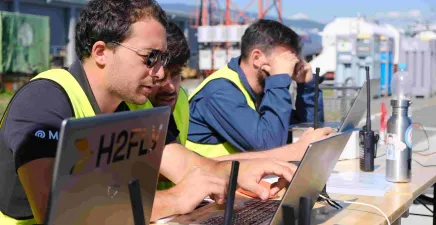
The company backs that human judgement with structure. Candidates complete live technical and workshop-style exercises designed to show how they approach an unfamiliar problem, the questions they ask, how they explain their reasoning and how they collaborate with others.
Fretz is also clear about the trade-off. This takes more time than conventional CV screening. Her experience has made structured interviews, practical exercises and multiple perspectives increasingly important if organisations want to hire for potential without simply relying on instinct.
Key takeaways from this In Practice video
- H2Fly establishes technical competence first, then looks at how candidates think, learn and respond to unfamiliar problems.
- Candidate screening remains human because the company wants to consider people whose experience may not match familiar job titles or career paths.
- Live technical exercises focus on how candidates reach an answer as well as whether they reach the right one.
- Workshop-style assessments allow future colleagues to see how candidates communicate, challenge assumptions and work with others.
- Hiring for potential takes more time, making structure and multiple perspectives important parts of the process.
Watch the full video above to hear Christina Fretz explain how H2Fly hires for potential and why she believes some recruitment decisions should remain human.
Read the full story: Hiring for potential: how H2Fly finds engineers without AI screening
Transcript: Christina Fretz, HR manager, H2Fly
I think the biggest risks in AI is that a CV tells you what someone has done, but a conversation tells you how they think. And when you're working on challenges that don't have an established playbook yet, how someone thinks is often far more important than whether they've done the exact same job before. So we're always interested in how people approach problems they've never seen before and how they collaborate with others, how they respond when something doesn't work, and all that stuff isn't really taken into account when AI is doing the screening for you and you're not talking to the people and looking through the lines.
Why H2Fly keeps AI out of candidate screening
So we chose to not use AI to screen candidates. I think AI can be very useful in recruitment, but screening is actually where I'd be most cautious using it. Because at age2fly, we're often looking for people who have relevant experience, even if they haven't done exactly the same job before. And an algorithm like AI is using will naturally look for familiar keywords and career paths, while we're looking for potential adaptability and the ability to solve new challenges. So when thinking of using AI in a screening process, what would concern me most is the talent we'd be missing.
There is an example of someone whose C V or career path might have cost definitely a more conventional recruitment process. so one example that comes to my mind is an engineer who had completed a relevant degree, but then spent several years working outside of the profession, mainly in the hospitality industry, which is basically something very different. So in a traditional recruitment process that career gap from engineering might have been enough for the application to be rejected. But when we spoke to him however, we saw strong motivation, we saw curiosity and the right mindset, so we decided to bring him on board as an intern to give both sides the opportunity to learn more.
And then it turned out to be an excellent decision because he quickly demonstrated strong technical capability, he integrated very well into the team, and he's now been working successfully as an engineer at H to Fly for several years.
How H2Fly assesses potential in practice
So what we basically always do is we have recruitment that is very a very active process. so we mainly don't just post job ads and wait for applications, but we work closely with our engineer engineering leaders to understand not only the technical requirements.
But also the mindset and the qualities needed in order to succeed when H2Fly evolves. So we then use sourcing networking. We also use referrals and direct outreach in order to identify the talent, always and often looking beyond obvious matches and focusing also on on transferable skills and the potential of the people. So we are not only posting our job ads, but we're looking beyond of that.
So when I talk about hiring for potential, so what's very important for me to clarify, potential is never instead of technical death. So but I'd say it's definitely the second question after the competence is established. So that's why candidates complete at age to fly a live technical exercise during the interview process. And what we're really assessing isn't whether they arrive at the perfect answer straight away, but how they get there. And I think that's where the potential lies. Because we're always asking ourselves, do they ask thoughtful questions? Do they state their assumptions? Are they comfortable saying, I don't know? Or how do they make decisions when faced with uncertainty? And also can they explain not just what they would do, but why?
And I think that's very and particularly important at H2Fly, because we are developing many things that simply don't come with a predefined playbook. And we design and engineer the vast majority of our components in-house, which means we need people who are strong problem solvers, comfortable with ambiguity, and excited about building something from the ground up.
And that mindset doesn't only matter when we hire people, but it also influences how we develop then. And I think that's where the potential lies and what we need to look into in order to, you know, hire the right people and developing them not only for who they are today, but also for who they can become as the company grows.
When talking about all the people skills, I think that's something that's very important. And one example is definitely the workshop style exercise that Camp did it complete on side with us without preparation. And I think that's an important thing because we give them a real challenge to work through together with the team members and observe how they approach it. So we're not primarily looking for the perfect answer, which I said before, but what interests us is how they think. do they ask the right questions? Do they challenge assumptions? How do they structure a problem they've never seen before? And how do they, and that's very important, collaborate with others and communicate their ideas, because communication is always key, which we know. So those situations often tell us much more than a C V ever could.
So technical experience is important, of course, but we're also looking for curiosity, problem solving ability, and willingness to learn. Saying that, in a company like H2Fly, is we are constantly solving new challenges, and those qualities are often the best indicators for us of someone's long term potential and success within H2Fly.
So harder about that approach than I expected and I'm now in the role for five years now. so I'd definitely say our approach is more time intensive than traditional C V screening, but we are building relationships, we are assessing potential and we are looking beyond keywords simply simply because that is what I think is the best way to do. But this definitely requires more effort. So we've learned how important structure is. So if you're hiring for a petential, you need structured interviews. We need practical exercises and multiple perspectives in order to make a good decision. And while this takes more time, I think we found that it leads to better hires and a stronger l long term fit. And as I said at the end, I think for me at least, recruiting isn't just about filling positions, but it's about finding people who want to be part of the journey and are excited what we do every day to help us achieve something meaningful together.
Three lessons for hiring beyond the CV
So if I had to leave people with three takeaways from the age to flies approach, they would be, first of all, higher for competence, but don't stop here. So once the technical foundation is there, look closely at mindset, learning agility and potential, because I think skills can be developed, but curiosity, resilience and the willingness to grow are much harder to teach.
And then second, spend time understanding how people think, not just what they've done. Because the C V tells you about someone's past, but conversations and practical exercises and real interactions with people tell you how they'll handle the challenges that are ahead of us.
And then third, think long term. I think recruiting isn't just about filling a vacancy. It's about really finding people who believe in your mission, who can grow with the company and want to contribute to something bigger than their individual role. Because at the end of the day, the perfect C V doesn't always become the most successful employee, you know, especially in a fast moving and innovative environment like H2Fly is it's often the people who can learn, adapt, and continuously develop who create the greatest impact.
About the author