Summary
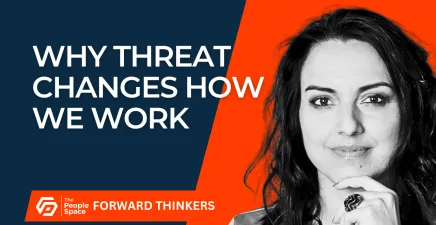
In this CHRO Perspective episode Emma Yearwood, HR director at Sodexo Engage, explores the wave of emerging people trends reshaping today’s workplaces and how HR leaders should respond.
Emma reflects on the scale of change and uncertainty facing organisations, from quiet quitting and career cushioning to the growth of the gig economy and rising stress and burnout. She explains how these trends affect employee mindset, engagement and productivity, and why HR leaders need to look beyond headlines to understand what is really happening inside their organisations.
Drawing on Sodexo Engage’s experience, Emma shares how focusing on communication, engagement, wellbeing and strengths-based leadership has helped create greater certainty for employees during uncertain times. She also discusses the shared responsibility between employers and individuals for upskilling, purpose and long-term career resilience.
“I’ve seen more HR trends emerging, even in the last year, than for many years previously,” says Emma Yearwood, HR director at employee and consumer engagement business Sodexo Engage. “And the reality of the uncertainty in the macro environment is impacting [organisations] internally.”
There is no sign that the shifts in the working environment fostered by and since the COVID-19 pandemic first hit the world are receding. Change abounds both in and out of work and people professionals need to be highly conscious of the impact of their people, says Yearwood. “It is affecting how people are arriving at work, their mindsets while at work, their productivity, engagement – all the things it is within our interest to be proactively managing and monitoring,” she says.
In this video interview Yearwood outlines the big trends she is seeing which are affecting people at the moment and outlines the approaches Sodexo Engage is taking to meet the challenges head on. She also talks about the capabilities organisations need for the future. As she concludes: “As well as looking at the capabilities that need to be built for the future from the organisation perspective we need to look at what that appetite is within the workforce and provide a more flexible, wider infrastructure and holistic L&D in order to support those aims and ambitions – and ultimately to support with the retention and attraction of talent.”
About Emma Yearwood
Emma Yearwood is HR director at Sodexo Engage, leading the people agenda to deliver a best in class employee experience for those within the business and creating experiences that make a real difference to people’s lives, both inside and outside the workplace. She has post graduate qualifications in both Strategic HR Management and Employment Law and is a Chartered Fellow of the CIPD. She is also currently training as an executive coach as part of her drive to continually upskill.
Emma has spent nearly two decades in HR, undertaking various people roles across different industries, ranging from manufacturing to retail and even within the fintech market. In October 2017 Emma joined Sodexo Engage as head of people and has been with the business ever since, now holding the role of HR director.
At Sodexo Engage, she specialises in employee and consumer engagement, creating and delivering initiatives on the wide range of HR and business interconnecting topics that drive the company's people agenda. Emma’s focus is on developing Sodexo Engage’s organisational capability, enhancing the employee experience and enriching the overall culture.
Transcript
Why uncertainty is reshaping today’s workplace
We've seen more change in the last three years than we've seen in a generation – and more uncertainty. Through the pandemic, through other trends like the Great Resignation and the pressures that they've put on workplaces, through to the cost of living, I've certainly seen more HR trends emerging, even in the lastyear, than there have been for many years previously.
And the reality of the uncertainty in the macro environment will be impacting internally. And equally the buzz headlines that we are hearing about things like quiet quitting and career cushioning – all of these different areas ofconsideration for businesses and people who are working – are going to build towards that uncertainty; certainly keep the momentum around how people are feeling the landscape is shifting. So that's something I think as peopleprofessionals we really need to be aware of because it will be affecting how people are arriving at work, their mindsets while at work, productivity, engagement, all of the things that it is really within our interest to be proactively managing and monitoring and driving our agendas forward with.
The people trends HR leaders need to understand
I think most people are quite aware of the Great Resignation, seeing unprecedented levels of individuals leaving either their current employer to go and find opportunities in alternative organisations or leaving the workforce alltogether.
That's coupled with what we see as a boom, a ballooning of 30%, in the gig economy. So we can see that people are taking other opportunities, to take self- employment, to have a focus on different alternatives to being in full-timeemployment. So that's something that we really have to navigate and I think has affected most businesses.
How quiet quitting and career cushioning show up at work
You've then got quiet quitting, which really appeared in the back end of last year. And that's about the psychological withdrawal from your workplace. So that is what we would've called back in my manufacturing days ‘working to rule’.It's doing what is required to fulfil the bare minimum needs of the role and contribute to your organisation but that discretionary goodwill, that additional effort – this trend is suggesting that people are withdrawing those elements oftheir working practices.
So career cushioning – and I think we'll go on a bit more about career cushioning because it's definitely one of the recent areas of development that's been described – and it's very much around the uncertainty of the economy resulting in people feeling like they need a B plan and that B plan might well be opening your network, making sure that people are aware that you're available to other opportunities. It might be assessing your skillset to look at where your gaps are and proactively looking to fill those gaps. It might be taking a career coach. There are many different areas but essentially it is finding a way to bolster a skillset so if the worst does happen, and many are predicting the worst mayhappen, that there is an opportunity to cushion the impact of that.
So that's just a few to navigate around. And what we're seeing, from the data, from the surveys that we receive, is that people are tired. And I think a stressed nation is one of the recent reports that I have been looking to, talking about 74% of individuals have felt overwhelmed or stressed in the last year. You then go to surveys from the ONS and they're talking about how they predict, manage and record wellbeing using four very particular markers like meaningfulness,happiness, levels of anxiety. And what we are seeing is that these have deteriorated and not recovered to previous to the pandemic levels. So this is still very real and will be showing up in workplaces.
How Sodexo Engage is responding to emerging HR trends
I think when you see all of these emerging areas, and it's largely been news that could be quite frightening to individuals and to businesses, there's a moment that we decide how we are going to approach that. And for us as a business, we have taken the view of trying to flip the lens on some of these trends to look at what's the impact for us? What's the impact for our people? What can we expect and how should we manage this? So I think that what's been really important for us is to focus on some of our existing strengths.
Why communication and engagement matter more than ever
If we think about Gallup and how they describe strengths of individuals, organisations and teams and to really triple down our efforts in those areas. With so much uncertainty, a leadership responsibility to my mind is to place certainty where you can. To place assurances where you can within your workforce. And that's something that we have done through communication, through rituals, through celebrating our successes, through really making sure that ourrecognition agenda is as strong internally as it can be.
And ensuring that's really targeted on positive messages, transparency, authenticness of our business personality. So we've done a huge amount of work around communication, as I'm sure many organisations have.
So another area that we've really focused on, which will probably come as no surprise, is our engagement. When we look at measuring and monitoring, we can look at the trends, we can look at what we think is happening externally andhow that can be impacting individuals but what we really need to do from that point is to ask the right questions. And that's partly through service, and for us engagement surveys, increasing the regularity of those surveys and ensuringthat we ask really meaningful questions.
So to make that more concrete, we have added wellbeing questions. We have added questions about security. Wehave added questions that really lean towards and connect with the trends that we feel may be impacting individuals. So, you know, expanding that wellbeing, expanding that engagement agenda, has been really important for us.
But I think more than the collection of the information, more than understanding just what is impacting individuals, is really taking some positive and targeted action based on what we're hearing. So we spent, and it leans back to the communication theme, but we spent a lot of time working with our business leaders to explore what we have found, to also make sure that we are aligned and connected in terms of our approach and how to respond to that as a business, and targeted action plans, from an organisation and a central perspective down to a functional perspective. Because what we have learned, and I'm sure it's not unique to us, is that we can see variances in different areas of the organization, andit's important to personalise our responses as much as is possible.
The shared responsibility for upskilling and career resilience
Both the employer and the individuals have a role, a very important role, to play in terms of upskilling and widerdevelopment and career planning.
So, if I were to break that down, I think that the responsibility of the organisation is to build the capabilities that they're going to need for the future. And we've already touched on the fact that as well as what we see as change in theenvironment, there has been a huge amount on digital transformation and that has called for a different skillset to takebusinesses into the future.
And that requires some education. It requires some learning and development. And it really requires an assessment of the capabilities that we have today and we need for the future. So I see that the responsibility of the employer is to putan infrastructure around that so the job that is required for today and for the future can be undertaken.
But more widely than that, I think that we see much in terms of the research and anecdotal evidence to say that people are leaning very much towards purpose. Underneath all of the trends that we've touched on is this reassessment of howam I spending my time? What is meaningful for me? Where do I want to contribute my skills and talents?
And it's prudent for an organisation as well as looking at the capabilities that need to be built for the future from the organisation perspective, to look at what that appetite is within the workforce, and provide a more flexible, wider infrastructure, holistic L&D in order to support those aims and ambitions and ultimately to support with the retention and attraction of talent.
About the author