Summary
As AI drives up competition for jobs and automates routine communication, networking is shifting towards depth, trust and long-term relationships. This article explores why people who describe themselves as reluctant networkers – often introverts – may be well suited to this change. It examines how hybrid work and digital tools support quieter networking styles and outlines practical ways to build effective professional connections without relying on traditional networking events.
Why networking matters more as AI reshapes early careers
Having celebrated my youngest son’s university graduation last summer, my attention has been drawn to the many articles on the state of the job market, especially for graduates. An article in The Times in November 2025 quoted a report by Adzuna that graduate job openings had fallen by 40% over the past year. “The graduate jobs market has underperformed the rest of the economy as the rollout of artificial intelligence has led to a cutback in entry-level hiring. Graduate jobs fell by 13,500, or 1.5%, between September and October,” Adzuna said.
And not only have vacancies fallen but, by using AI to generate applications, the number of applications per role is rising. An article last month in The Economist is titled: Job applicants are winning the AI arms race against recruiters, stating that the number of applications an average candidate sends has risen by 239% since ChatGPT’s release in 2022.
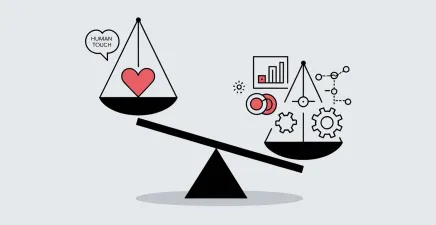
My talks on networking include ones to young people at the start of their careers and it struck me that encouraging them to embrace networking as a way of getting on at the start of their careers has never been more important. In a world increasingly dominated by technology, I think it will be the quality of our human connections that will be what allows individuals to stand out and succeed, whatever stage of their career they are at.
I conduct polls at the start of my networking talks asking audiences if they would describe themselves as ‘natural’ or ‘reluctant’ networkers. Consistently, these polls reveal that about 2/3 describe themselves as ‘reluctant’ and only 1/3 as ‘natural’. Even if not perfect, there is a good degree of correlation between reluctant and introvert and natural and extrovert. My message is simple…just because you think you are a ‘reluctant’ networker doesn’t mean you cannot be a highly effective networker. I am firmly in the ‘reluctant’ camp and yet have carved out a 20-year career as an independent, where all my work comes via some sort of networking.
And so, as we think about what it will take to succeed in this hybrid world increasingly dominated by technology, could it be that the more introverted personalities are better suited to develop effective networking styles that build longer-lasting, more meaningful relationships?
Why trust and relationship depth matter more than visibility
The OED defines networking as “the action or process of interacting with others to exchange information and develop professional or social contacts”. I would go further and define it as a lifelong approach to building professional (and personal) relationships based on mutual support to help you have a successful and enjoyable career.
If that is the case, then the mantra becomes ‘quality over quantity’ and ‘trust over visibility’. I would rather have fewer, deeper relationships that I actively invest time in building than several thousand connections/followers on LinkedIn who don’t really know what it is that I do…save that for the celebrities. When I ask people what they think networking is so much of the discussion is about networking ‘events’ and their fears about how to work a room full of strangers. I challenge them to think about all the people they already know and when it was that they last were in contact with them. Would that not be a more productive use of their networking time?
So maybe the introverts actually have all the traits needed to be great networkers, it’s just that many don’t realise it, thinking they need to enjoy and be better at ‘pressing the flesh’ and ‘working the room’?
How listening, preparation and trust-building create stronger networks
In Susan Cain’s book Quiet - The Power of Introverts in a World That Can’t Stop Talking she shares a number of character traits of introverts that, in many situations, make them more effective leaders than extroverts. These same character traits are as likely to help introverts be highly effective networkers in this ‘noisy’ world we live in.
At the heart of it is the introvert’s more natural tendency to listen well and to think before speaking. This makes their counterparts feel heard and valued. A more thoughtful approach is likely to lead to better questions. As Stephen Covey wrote in The Seven Habits of Highly Effective People, Habit 5 is “seek first to understand, then to be understood”. These are all key ingredients of building trust. Without high degrees of mutual trust there is only so far a relationship can go.
A more thoughtful, structured mindset can also lead to better relationship-building both before and after conversations take place. Checking out counterparts’ profiles on LinkedIn can lead to good rapport-building early on if you establish common interests or experiences. Wider research on their organisation or sector will also lead to a more productive, impactful conversation. And then meaningful follow up will lead to further deepening of the relationship.
In their book The Trusted Advisor, Harvard professors Maister, Green and Galford articulate the ‘Trust Equation’. This states that trust is a function of credibility + reliability + intimacy divided by self-orientation. It is not hard to see how an introvert’s approach to relationship building is likely to score well on all these criteria.
How digital and hybrid work support different networking styles
One of the big changes resulting from the Covid-19 pandemic was the increasing use of digital channels for communication. This not only covers work and social interactions but also networking. Before the first lockdown in 2020 I rarely used video-conferencing for my networking activities, limiting it to an occasional Skype call with an overseas contact. Suddenly my calendar in that first lockdown was filled with Zoom catch ups, deepening existing relationships with existing contacts, many of whom I had not spoken to for some time.
This confluence of availability of good technology and changes in social habits meant that I could now network (more than just via a LinkedIn message) with anyone, anywhere in the world. No longer was my networking restricted to going to events or having time-consuming 1-2-1s with contacts in my local area or wherever I happened to be travelling to. And while in-person networking events have made a return, they are no longer the default method of networking, with many groups choosing to meet online or using a mix of online and in person events. All of this puts the introverted networkers in a good position as they can mix and match their networking activities to play to their strengths.
Why emotional connection cannot be automated
And all of this is before AI takes over much of our low-level communication and interactions. No doubt, as AI becomes more sophisticated, we will start using it to automate some of the more superficial aspects of our networking (think routine congratulations messaging on LinkedIn for birthdays, new jobs, promotions and work anniversaries as a start). What will remain for us humans to do is the deeper connecting on a more emotional level. This is where introverts often shine.
How to build a sustainable networking approach that works for you
So, what does all this mean for how people (both introverts and extroverts) should go about their networking in the coming years?
- Recognise that there is no one ‘ideal’ way to network
There are many ways to do it, and we can all develop a style that ‘works for me’, allowing us to be authentic. If we accept that networking is a long-term relationship building activity, it’s hard to do it consistently well if we don’t feel that we are being true to ourselves. If you find going to networking events difficult, don’t worry so long as you deploy plenty of the other ways to network (eg, 1-2-1 and digital networking).
- Be more intentional with your networking and make a habit of establishing some routines.
I shy away from the advice to set SMART goals for your networking as this can lead to a rather transactional approach (I’ll only talk to XYZ if I think they can help me). In my experience this puts a lot of people off, both the person asking and the person being asked.
The trouble with networking is that it is usually hard to measure the tangible benefits of any individual conversation. Sometimes the benefits come months or years later (and sometimes never). And other times the benefits are not what you had expected (one of my networking chats led to a job for one of my sons and the opportunity just came up naturally as we were talking about our families). For me, being ‘intentional’ is being clear on who I should network with (which is driven more by the strength of our relationship than their job title and if I think they can help me) and then just getting out there and having good conversations without any pressure of getting something out of each one. Do that well and good things happen!
- Take the opportunity to ‘blend the best of both’ – ie, analogue and digital channels
Digital channels are great for efficient networking. Keeping in touch with the outer echelons of your network by checking your LinkedIn feed for updates from your network is a daily routine that should take no more than 5 minutes. Having a Zoom catch up can be done in 30-45 minutes from your desk rather than travelling to meet someone and then spending at least an hour with them as seems the custom. And then use the analogue networking for more high-quality networking. A 1-2-1 on Zoom is pretty effective but does not create the strength of connection that having a coffee or lunch together can do. And if you do go to events, how about being selective and going to ones where you may know some people, allowing you the opportunity both to deepen existing relationships as well as meet some new ones?
- Ensure your networking ‘mindset’ is always ‘2-way’
Even if you need something from a networking conversation always ask if there is anything you can do to help the other person.
Why networking is becoming a human skill not a performance
As we move forward into an era where human and machine coexist side by side we have the opportunity to dial up both dimensions…yes, we need to leverage the technology but not at the expense of expanding our human connections. Networking should be seen not as a performance but as a craft based on curiosity, empathy and intention. Introverts may be well positioned to thrive so long as they can overcome their doubts and misconceptions about networking and craft their own way to become effective networkers.
About the author