Summary
- Faster AI production does not necessarily mean lower workload across the whole workflow. Prompting, checking and integrating AI output can create new demands.
- Dr Liane Davey calls the cognitive and emotional burden employees carry alongside their workload ‘thoughtload’.
- Generating more AI output can increase work for colleagues who must read, validate, correct or act on it.
- Managers need to assess AI productivity through outcomes and quality as well as the speed or volume of output.
Artificial intelligence promises to be a boon to our productivity. But are we going into it with our eyes wide open? Sure, it will help increase our output and liberate us from sizeable chunks of our most arduous workload...but what about its effect on our ‘thoughtload’?
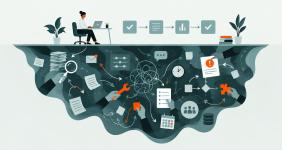
Thoughtload is the invisible tax on our performance that comes from a treacherous triad of rising cognitive demands, increasing emotional burdens and declining energy reserves. While someone’s workload might be manageable, the additional distractions, complexity, decision fatigue and triggering interactions of work and life can make their thoughtload unmanageable. As thoughtload increases insight, creativity, and connection decrease, while fatigue, frustration and stress climb.
AI can lower our workload while amplifying our thoughtload. We need to pay as much attention to how AI costs us in heavier thoughtload as we do to how it benefits us through lightened workload.
How AI can increase cognitive load even when it reduces workload
AI is allowing us to generate output at a rate we never could have imagined. An environmental engineer recently showed me how he used AI to take soil sample data and create a remediation plan for a former industrial site. What would have taken him 80 hours could now be completed in one second of processing time. The ability to process tasks is incredible.
In some ways it’s that ability to produce with little friction that is covering the true concerns about how AI will impact our cognitive demands. Consider the following implications of widespread use of AI:
Why more AI output does not necessarily mean greater productivity
The ease of generating output is encouraging people to produce more and more but not all outputs created with AI are as beneficial as the engineer’s remediation plan. I more often see reams of research, competitive analysis and consumer profiles dumped onto an already overwhelming mountain of input that no one has time to read, process or act on. The risk is that we efficiently create unhelpful materials. That only adds to the cognitive demands people are carrying with little payback.
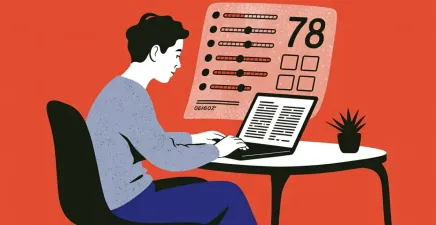
A second concern is that AI is shifting the cognitive load to more taxing work. Although AI might alleviate workload by scanning and synthesising research, drafting documents and answering repetitive questions it still requires humans to iterate on prompts, validate results and integrate output into their work, often on many topics at once. As such, using AI can remove simple tasks that could be completed with less effort, while replacing them with more complex tasks that drain us more quickly.
In addition to having to run faster to keep up AI might also have you running madly off in all directions. Researchsuggests that AI mirrors a user’s disorganised thinking and exacerbates the diffusion of attention with constant offers to run additional prompts, often in multiple directions at once. It’s no wonder that our language on the perils of AI has shifted from ‘cognitive offloading’ to ‘cognitive surrender’ in a matter of months.
The implications for managers are clear. Stay ruthlessly focused on the outcomes you need the team to deliver. Factor in the risk of diluting the team’s attention across too many tasks and avoid rewarding people who generate voluminous outputs simply because they can do so effortlessly. Instead recognise those who effectively leverage AI to deliver better outcomes. It’s not worth being productive if being productive doesn’t make you more effective.
Which parts of thinking should not be offloaded to AI?
While we’ve been talking about the perils of allowing AI to flood people’s thoughtload the opposite problem is also worth considering: are they offloading the wrong components of their thoughtload and diluting their value, eroding their engagement or letting their skills lapse?
We have to guard against offloading processing, creativity and judgement. There are places where taking on the cognitive load is essential and we don’t want to surrender our ability to think deeply. I made that mistake in becoming a GPS automaton, completely lost and disoriented the moment my Google Maps goes offline. You don’t want the same to happen with the abilities that are central to the value your team creates. Don’t allow cognitive atrophy.
Managers need to include conversations about employees’ unique value in their development discussions. Help them consider which tasks can be fully automated, which can be partially automated and augmented with human input and judgement and which should be fully human-powered. It’s also critical to provide timely feedback if you get the sense that they are producing low-quality outputs or failing to process ideas deeply.
The emotional burden of working with AI
While the cognitive costs of AI are high they are better understood and therefore more likely to be managed than the emotional costs. There’s the obvious existential dread of using a tool that might someday make you redundant but we need to consider the more quotidian stressors as well.
Why human accountability still matters when AI does the work
Using AI doesn’t absolve the user of accountability for what they create, so it’s essential to take on no more than you can manage. Yet I’ve seen examples of people working recklessly fast and getting used to a steady state of dread and anxiety that something might go wrong. There’s the fear of passing on AI-generated work marred by hallucinations, errors or meaningless slop, but there are also more serious risks. At a training industry conference I attended recently a leader admitted that he had trusted AI with his financial reports and was mortified, humiliated and panicked that an error in the calculations had led to an emergency cash-flow crunch. Don’t think you can abdicate your accountability to the technology.
How AI can create extra work for colleagues
There’s one other emotional risk worth mentioning. I’m hearing many tales of people who are allowing the ease of production to lure them into using AI to do their colleagues’ jobs. One recent study showed that this ‘scope creep’ happens easily. The problem is that for the person on the receiving end it’s not just a lot of work to review and validate what their colleague created but also a subtle (or not-so-subtle) cue that your teammate thinks you could be doing your job better. That invalidating information sits like a brick in your thoughtload.
Managers need to encourage their team members to stick to their own work and refrain from generating unsolicited AI content for their colleagues. If they want to be helpful and add value, encourage them to use AI to generate good questions to ask their colleagues, rather than overstepping by doing someone else’s job.
How managers can reduce AI thoughtload at work
The implications for both managers and individual contributors are clear; when leveraging AI to increase productivity it’s essential to consider the cost-benefit in terms of the most holistic measure of thoughtload rather than the narrower concept of workload. Distinguishing the two will allow several practical steps to improve the value of AI while decreasing its burden on employees:
- Align around the desired outcomes of work, rather than getting carried away with producing more outputs
- Be deliberate about where technology strengthens the team and where it risks diluting the quality of the work or causing human skills to atrophy
- Manage workload by considering how many disparate threads one person can be fully accountable for, rather than downplaying what’s required to monitor, evaluate, and refine AI-generated products
- Set ground rules for how your team will use AI including standards for how you will use and share information across different roles
- Encourage periods for rest and reflection to provide a break from the heavy thoughtload demands of continual AI usage.
AI will undoubtedly create new ways to handle a heavier workload. The issue is that workload is only one part of our experience. Until we learn how to plan and manage the thoughtload associated with using AI it will be as much a burden as a relief.
About the author