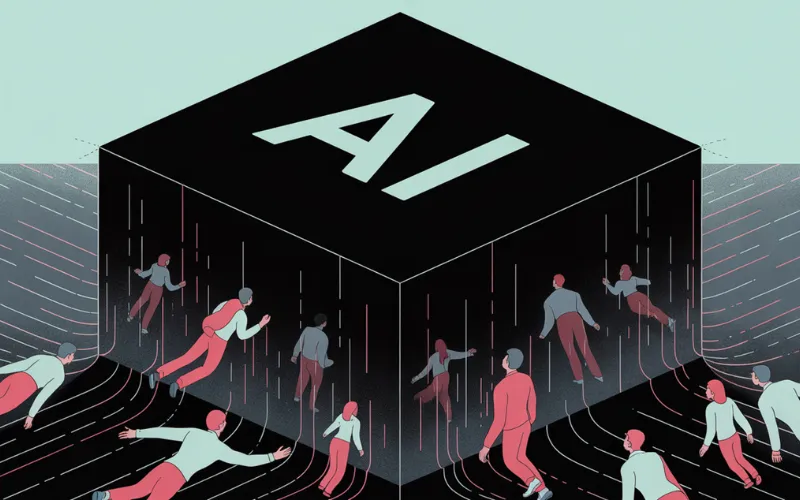
Artificial intelligence is rapidly becoming embedded in modern hiring practices. Whether it’s scanning thousands of resumes, analysing recorded interviews or assigning predictive personality scores, AI promises to make recruitment faster, cheaper and potentially fairer. But while the tools may be cutting-edge, the thinking behind them often remains stuck in the past.
Many of today’s AI-powered hiring systems operate on a narrow premise: that a good hire is someone who ticks a predefined set of boxes – education, experience, keywords or scores. Candidates are evaluated as isolated inputs in a linear process. This approach misses the deeper value modern organisations derive from their people: how they collaborate, contribute to team intelligence and adapt to dynamic environments.
The real question, then, is not whether AI should be used in hiring but how it should be used.
The promise – and pitfalls – of AI in hiring
There’s no doubt AI has improved the mechanics of hiring. A process that once took days, like filtering hundreds of resumes, can now be completed in hours. Chatbots handle scheduling and basic Q&A. Video interviews can be analysed for verbal cues and tone. AI offers consistency, speed, and scale that traditional methods cannot match.
Yet, this efficiency often comes at a cost. Many candidates report feeling like they’re being evaluated by a black box, especially when they’re rejected without human interaction. Hiring managers may be left wondering why certain strong candidates didn’t make it through automated filters. The technology isn’t necessarily flawed, it’s the framing and application that’s misaligned with modern organisational needs.
Most AI tools treat hiring as a transaction: find the best individual for a set role based on isolated attributes. But the real value of hiring today comes from contextual fit: how someone will contribute to the team, adapt to evolving challenges and support strategic goals. That’s where we need a new framework.
From filters to facilitators: The 3C Framework
To rethink AI’s role in hiring, we propose the 3C Framework: Calibrate, Clarify and Channelize. This approach, introduced in our book The AI-Centered Enterprise drawn from broader applications of context-aware AI in enterprises, helps organisations align the capabilities of AI tools with the strategic value of the roles they’re hiring for.
Calibrate: Matching tools to tasks
Calibration is the first and most fundamental step. It involves aligning your AI tools with the nature of the decision you’re trying to make. Some hiring problems are straightforward and data-rich, for example checking whether a candidate meets licensing requirements or has a specific technical skill. These tasks require precision and work well with structured data and traditional machine learning models.
However, many hiring challenges are far more complex. Consider evaluating a candidate’s ability to lead cross-functional teams, to bridge legal and product concerns or to drive cultural transformation. These decisions involve a high degree of ambiguity, rely on unstructured inputs like written communications and demand nuanced interpretation. Here, more sophisticated, context-aware AI is required – tools that can synthesize internal documents, feedback and team interactions.
The goal of calibration is to avoid mismatches. Using a resume parser to evaluate leadership potential or relying on AI-generated scores without human oversight for high-stakes cultural roles, is like using a microscope to map a forest. The tool is powerful but ill-suited to the task. Calibration helps organisations choose the right tools for the right level of complexity and precision.
Clarify: Understanding strategic impact
Once tools are calibrated the next step is to clarify the strategic importance of the hire. Not all roles are equally consequential. Some hires are about maintaining current operations; others can reshape the company’s direction.
Hiring a support analyst might seem low-impact at first glance. But if the company is pivoting its customer experience strategy, that same role could be a frontline ambassador for brand transformation. Likewise, a mid-level product hire could become the critical connector between legal, engineering and customer teams during a period of regulatory transition.
Clarification is about situating the role within the broader organisational context. It requires HR leaders and hiring managers to ask: What problem are we really trying to solve? How will this person contribute beyond their job description? What frictions exist across teams that this role could help resolve?
Context-aware AI can support this process by going beyond surface-level matching. For instance, it can analyse communication patterns to identify cross-functional tensions, pull themes from strategy documents and suggest candidates who bring complementary experience or perspectives. Instead of asking ‘does this person meet the requirements?’ AI can help answer ‘how might this person help us move forward?’
Clarifying strategic impact ensures that AI supports hiring decisions that are not just efficient but meaningful.
Channelize: Implementing with purpose
The final step, Channelize, is about embedding AI into the hiring process in a way that is phased, intentional and grounded in both technological maturity and strategic relevance.
For low-stakes, repetitive tasks, like scheduling interviews or answering basic candidate questions, mature, off-the-shelf AI tools offer immediate value. These use cases are great starting points because they are low-risk and free up human time.
But for more strategic applications, such as selecting future leaders, building cross-functional teams or promoting internal mobility, AI must be deployed more carefully. These are scenarios where insights from unstructured data, organisational knowledge and cross-team dynamics are critical. Here, AI systems must act as advisors rather than judges, surfacing possibilities rather than delivering final decisions.
A successful channelization roadmap doesn’t try to do everything at once. It starts with narrow, well-understood use cases, builds trust through small wins and gradually expands the AI’s role into more complex territory – always with human oversight and ethical guardrails in place.
Real-world example: Unilever’s AI hiring overhaul
One of the most widely cited examples of this evolution is Unilever, which began reimagining its early-career recruitment process in 2016. Faced with thousands of applicants for graduate positions each year, the consumer goods giant partnered with HireVue and Pymetrics to revamp its hiring approach using AI.
Unilever’s journey offers a textbook application of the 3C Framework.
In the Calibrate phase the company used game-based assessments to gauge cognitive, emotional and social traits. processed using models rooted in neuroscience. These were followed by one-way video interviews, analysed by AI for facial expression, tone and content. Only after these steps did human recruiters enter the picture. Each tool was matched to the precision required. The early assessments emphasized scale and exploratory insight, not definitive judgments. Final decisions were made by people, informed by AI input. (Note from Editor, HireVue has since removed the facial expression analysis after public outcry).
For Clarify, Unilever wasn’t just looking for skills, it was identifying leadership potential. The goal was not simply to fill roles but to build a future pipeline of culturally aligned, adaptive talent. The AI was tuned to recognize attributes like curiosity, collaboration and resilience – traits that aligned with the company’s long-term strategy.
During Channelization Unilever didn’t rush. It piloted the new process in key markets, monitored for bias, ensured candidate transparency and scaled up only after validating the system. The results were compelling: a 90% reduction in time-to-hire, more than £1 million in savings and a measurable increase in candidate diversity. Crucially, candidates reported a more engaging and modern experience, and recruiters gained more time to focus on final-round evaluations.
As a case study, Unilever demonstrates how AI can move beyond filtering to facilitation – enhancing judgment, not replacing it.
Ethics and customisation: Building trust in the process
As organisations expand AI’s role in hiring ethical considerations must remain front and center. Transparency is essential – candidates should know when AI is involved and how it affects their application. Bias monitoring cannot be a one-time check; it must be ongoing, especially as models learn from historical data that may contain systemic inequalities.
Just as important is human-in-the-loop design. AI should augment decisions, not make them unilaterally. Judgment, empathy and contextual awareness are still uniquely human capabilities. Finally, customisation matters. Generic AI systems cannot fully capture the unique culture, priorities and workflows of a given organisation. Investing in tailored models and data inputs ensures that AI reflects not just industry best practices but your best practices.
The future of hiring is contextual – and human-centered
AI in hiring is not about replacing recruiters or removing subjectivity. It’s about enabling deeper understanding, improving signal-to-noise ratios and amplifying human insight. With the right framework in place – Calibrate, Clarify and Channelize – AI becomes a strategic partner in hiring, not just a screening tool.
The shift we need isn’t just technological. It’s philosophical. Instead of asking who’s the best candidate on paper we should ask who will help this team, this company, this mission evolve?
When AI helps answer that question we’re not just hiring faster. We’re hiring smarter and building organisations that are stronger, more connected and better prepared for the future.
About the author